The Caliphate Ghost: Why the US Just Dropped 40 Tons of Ordnance on a "Defeated" Enemy
The US military's latest airstrikes in Syria aren't just about neutralizing ISIS remnants—they expose a fragile containment strategy teetering on the edge of failure. Here is why Washington is still dropping bombs on a "defeated" enemy seven years later.
The dust had barely settled over the Homs desert this morning before the familiar geopolitical script began to run.
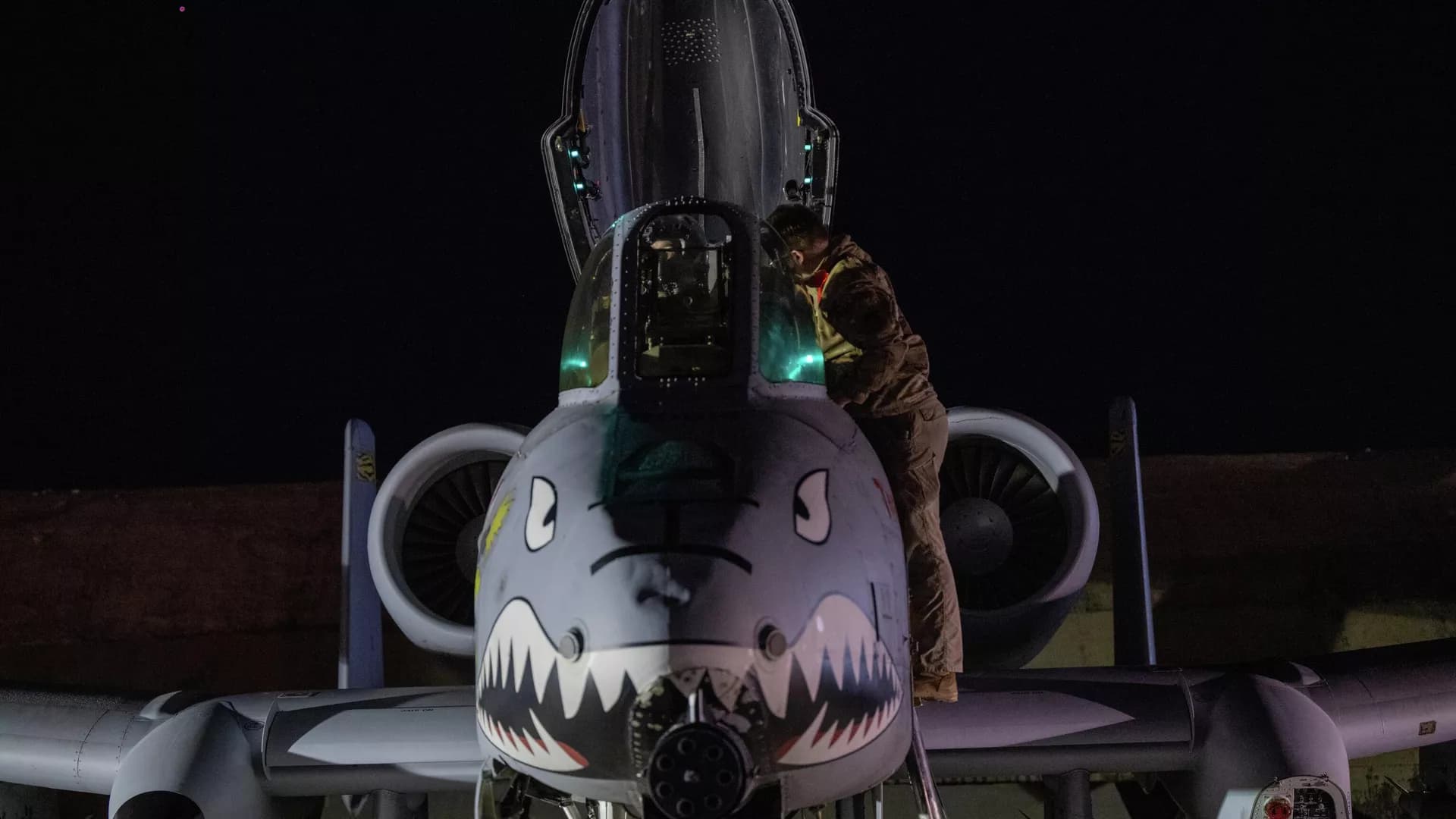
At 02:00 local time, while most of Washington slept, US Central Command (CENTCOM) executed a series of precision airstrikes against what they termed "multiple ISIS camps" in Syria. According to reports from the region, the operation targeted training facilities and weapons caches hidden in the rugged Badiya terrain—a lawless expanse that has become the de facto incubator for the terror group’s resurgence.
But here is the question no one at the Pentagon briefing wants to answer: If ISIS was "territorially defeated" seven years ago, why are we still flying sortie rates reminiscent of 2017?
The strikes are not a victory lap; they are a warning light. They signal that the containment strategy in Syria is cracking under the weight of global indifference.
The Mathematics of Attrition
This morning's operation was not a "mowing the grass" exercise. It was a reaction to a specific, quantified threat.
Intelligence sources suggest that ISIS has shifted from survival mode to operational expansion. We aren't seeing ragtag groups of fighters anymore; we are seeing coordinated logistics. The Sputnik report highlights that these strikes were aimed at "degrading the group's ability to plan and organize attacks," a sterile military euphemism that translates to: They were about to hit something big.
The Numbers:
- Targets Hit: 14 specific locations in the central Syrian desert.
- Assets Deployed: Likely a mix of F-15E Strike Eagles and MQ-9 Reapers, based on standard CENTCOM operational patterns.
- The stakes: There are currently 900 US troops effectively holding a hostage situation against 10,000 detained ISIS fighters in SDF-controlled prisons.
This is the friction point. Every time Operation Inherent Resolve conducts a strike like this, it buys time. But it doesn't buy a solution. The strikes destroy physical infrastructure—tents, technicals, ammunition—but they do nothing to dismantle the ideological network that recruits the teenagers currently rotting in the Al-Hol displacement camp.
The Vacuum in the Desert
To understand why these strikes happened today, you have to look at the map, not the press release.
The Badiya desert is a geopolitical black hole. It sits between the US-backed Syrian Democratic Forces (SDF) in the northeast and the Russian/Syrian regime-controlled areas in the west. ISIS thrives in the "seams" between these hostile powers. They exploit the lack of coordination between Washington and Moscow to move men and materiel.
When the US strikes, it is often because the Syrian Regime and its Russian backers have failed to police their own backyard. The terrorists use the regime-held desert as a safe haven to launch attacks into the US-held security zone.
This puts the US in the absurd position of acting as the air force for the Assad regime’s security, effectively cleaning up a mess that Damascus cannot handle, all while officially maintaining that our presence is solely to support the SDF.
The Contrarian Take: The Prison Break Nightmare
While the headlines focus on the airstrikes, the real story is the prisons.
The strikes on the camps are a distraction from the catastrophic risk of a "Breaking the Walls" campaign. ISIS leadership knows they cannot recruit fast enough to rebuild an army. Their strategy for 2026 is not recruitment; it is liberation.
They want to break 10,000 veterans out of the SDF detention centers in Hasakah.
- The Intelligence Failure: Western capitals have largely ignored the repatriation of these fighters.
- The Second-Order Effect: By conducting these strikes, the US is trying to disrupt the external command nodes that would coordinate such a prison break.
If those prisons fall, we aren't talking about "remnants" anymore. We are talking about the instant reconstitution of an army the size of a standard NATO division, battle-hardened and radicalized by years of squalor.
The Next Move
The strikes will likely result in a temporary lull in attacks on US bases like Tower 22 or the Conoco gas field. But kinetic action is a depreciating asset.
Without a diplomatic breakthrough that forces countries to repatriate their nationals from Syrian camps, or a unified strategy that bridges the gap between the US and Turkish interests in the north, CENTCOM will be flying these missions in 2027, 2028, and beyond.
We are dropping million-dollar bombs on ten-dollar tents because we lack the political capital to build a ten-cent solution.
Next Steps for the Reader:
- Watch the Institute for the Study of War (ISW) for their daily assessment of the battle damage.
- Monitor local Syrian news outlets for reports of civilian casualties, which often inflame the very insurgency the US is trying to quell.
Stay informed
Get our latest articles delivered to your inbox.
Related Articles
Artemis II Explained: Why NASA’s Next Moon Mission Won't Touch the Lunar Surface
Discover why NASA is choosing a flyby over a landing and how this high-stakes test drive paves the way for a permanent lunar presence.
Audio’s Red Carpet Moment: The Golden Globes Finally Bend the Knee to Podcasting
The Golden Globes have finally added a podcast category, signaling a massive shift in Hollywood's hierarchy. Here is why this isn't just about trophies—it's about the industry's obsession with audio IP as the new gold rush.
The Man Who Skated Through the Apocalypse: Why T.K. Carter Mattered
T.K. Carter, best known as the boombox-toting Nauls in John Carpenter’s sci-fi classic The Thing, has died at 69. A career chameleon who moved effortlessly between sitcom warmth and gritty drama, Carter defied the "expendable" tropes of 80s horror to leave an indelible mark on Hollywood history.
‘Uninvestable’: Trump pitch to oil execs yields no promises
Despite the dramatic capture of Nicolás Maduro and a White House push for a $100 billion investment to flood the market with cheap crude, US oil titans like ExxonMobil are rejecting President Trump's Venezuela pitch. The verdict? Without massive legal and economic reforms, the world's largest oil reserves remain "uninvestable.”