Audio’s Red Carpet Moment: The Golden Globes Finally Bend the Knee to Podcasting
The Golden Globes have finally added a podcast category, signaling a massive shift in Hollywood's hierarchy. Here is why this isn't just about trophies—it's about the industry's obsession with audio IP as the new gold rush.
The most telling moment of last night’s ceremony wasn’t a drunken acceptance speech or a host’s monologue bombing. It was seeing a podcaster—mic in hand, not for an interview, but to accept a statuette—standing shoulder-to-shoulder with Meryl Streep.
For decades, the Golden Globes functioned as Hollywood’s rowdy dinner party, a celebration strictly for the screen—big or small. But with the introduction of the "Best Original Podcast" category, the Hollywood Foreign Press Association (HFPA) has formally acknowledged a shift that industry insiders have whispered about for years: Audio is no longer the minor leagues.
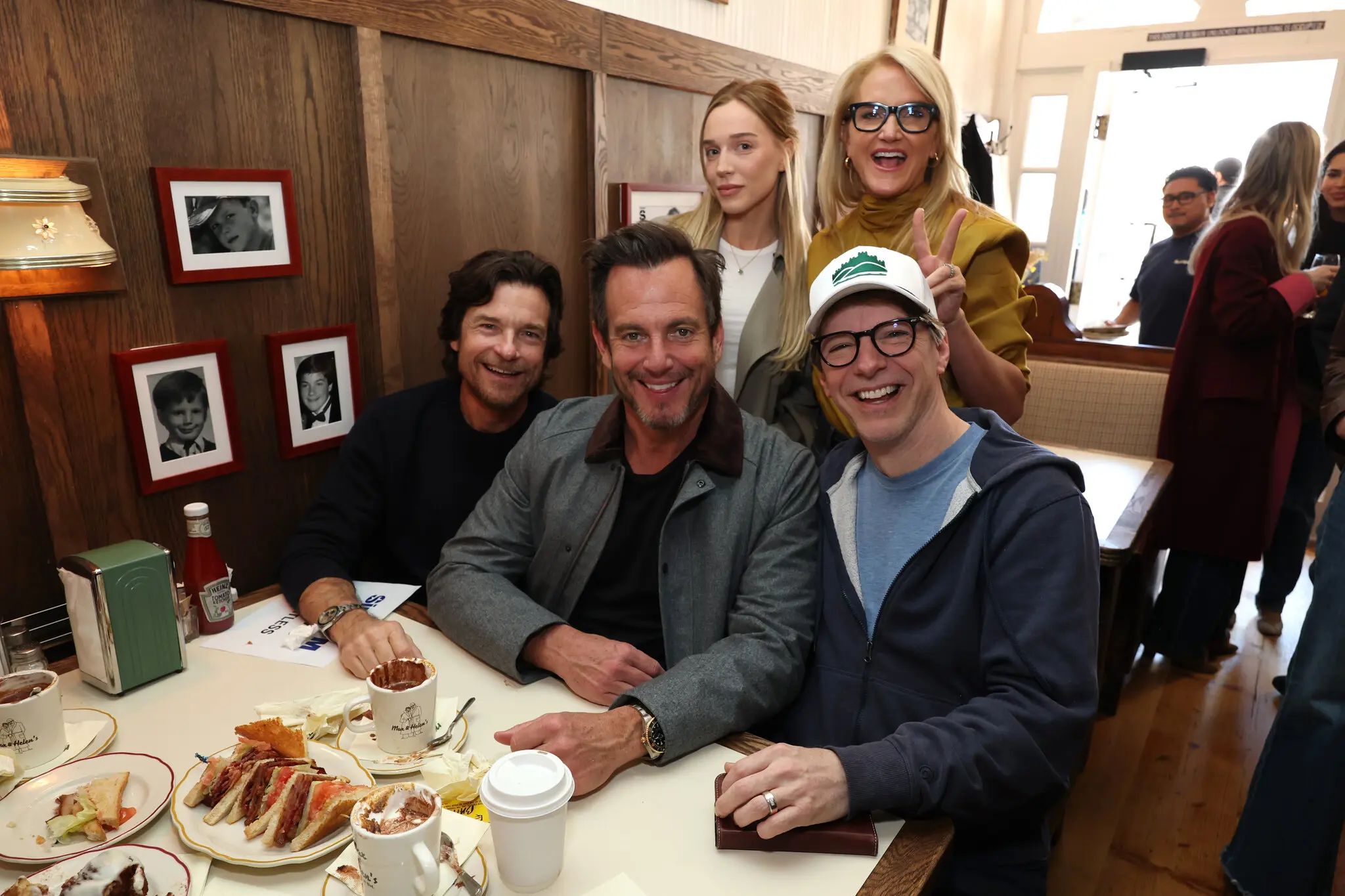
As reported by The New York Times, the inclusion of podcasts isn't just a nod to popularity; it is a desperate grasp for relevance by an awards body chasing the cultural zeitgeist. When a single episode of The Daily or SmartLess pulls numbers that rival primetime cable dramas, the question isn't why the Globes invited podcasters. It's why it took them this long.
The IP Gold Rush
The significance of this moment lies in the economics, not the vanity.
Hollywood is currently risk-averse, starving for guaranteed hits. The podcast chart has effectively become the industry's R&D department. It is cheaper to produce a ten-episode audio documentary than to shoot a single television pilot. If the podcast hits, the TV deal follows.
- The Data: According to recent industry analysis, over 30% of new prestige TV dramas in 2025 were adapted from audio IP.
- The Proof: Shows like WeCrashed, The Dropout, and Slow Burn paved the way. Now, the Globes are cutting out the middleman and rewarding the source material directly.
This creates a new power dynamic. The "Best Podcast" award is not just a trophy; it is a billboard for intellectual property. A win here adds millions to the valuation of a show’s back catalog and practically guarantees a bidding war between Netflix and Amazon MGM Studios.
The "Audible" A-List
The Times report highlights a distinct blurring of lines on the red carpet. It used to be that actors started podcasts when their careers stalled. Now, the podcast is the career anchor.
We are witnessing the "gentrification" of the medium. The nominees this year weren't two friends in a basement recording on a Blue Yeti. They were massive productions backed by Spotify, Wondery, and iHeartMedia, featuring full sound design teams, writers' rooms, and seven-figure marketing budgets.
When the Globes honor a podcast hosted by a celebrity, they aren't honoring "podcasting" in the traditional sense; they are honoring a celebrity's brand extension. This effectively closes the loop on the medium’s indie roots. The barrier to entry might still be low, but the barrier to recognition just got raised to a height that only venture capital can reach.
The Contrarian Take: The Death of Intimacy
While the industry pops champagne, we should be asking what is lost when we force audio into a tuxedo.
The magic of podcasting has always been its intimacy—the parasocial bond between the host and the listener. It thrives on authenticity, often messy and unpolished. By subjecting it to the glossy, political machinery of the Golden Globes, we risk incentivizing "Oscar Bait" audio: over-produced, self-serious content designed to win awards rather than connect with audiences.
The Second-Order Effect: Watch for the "limited series" boom in audio to explode. Creators will pivot away from long-running, conversational formats (which are hard to judge and award) toward finite, high-production narrative series designed specifically to catch a voter's ear. We aren't just watching the elevation of the medium; we are watching the homogenization of it.
The Verdict
The Golden Globes didn't save podcasting; podcasting might be saving the Golden Globes. In an era where linear TV ratings are in freefall, the awards show needs the engaged, fanatical audiences that podcasters command.
But make no mistake: The "Golden Age" of indie podcasting is officially over. It has been acquired, polished, and put on a stage in Beverly Hills.
Next Steps:
- Watch how the Academy of Motion Picture Arts and Sciences reacts—rumors of an "Audio Storytelling" Oscar category are already circulating for 2027.
- Monitor the ad rates for the winning podcasts; expect a 40-50% premium on CPMs (cost per mille) in the next quarter.
Stay informed
Get our latest articles delivered to your inbox.
Related Articles
Artemis II Explained: Why NASA’s Next Moon Mission Won't Touch the Lunar Surface
Discover why NASA is choosing a flyby over a landing and how this high-stakes test drive paves the way for a permanent lunar presence.
The Caliphate Ghost: Why the US Just Dropped 40 Tons of Ordnance on a "Defeated" Enemy
The US military's latest airstrikes in Syria aren't just about neutralizing ISIS remnants—they expose a fragile containment strategy teetering on the edge of failure. Here is why Washington is still dropping bombs on a "defeated" enemy seven years later.
The Man Who Skated Through the Apocalypse: Why T.K. Carter Mattered
T.K. Carter, best known as the boombox-toting Nauls in John Carpenter’s sci-fi classic The Thing, has died at 69. A career chameleon who moved effortlessly between sitcom warmth and gritty drama, Carter defied the "expendable" tropes of 80s horror to leave an indelible mark on Hollywood history.
‘Uninvestable’: Trump pitch to oil execs yields no promises
Despite the dramatic capture of Nicolás Maduro and a White House push for a $100 billion investment to flood the market with cheap crude, US oil titans like ExxonMobil are rejecting President Trump's Venezuela pitch. The verdict? Without massive legal and economic reforms, the world's largest oil reserves remain "uninvestable.”