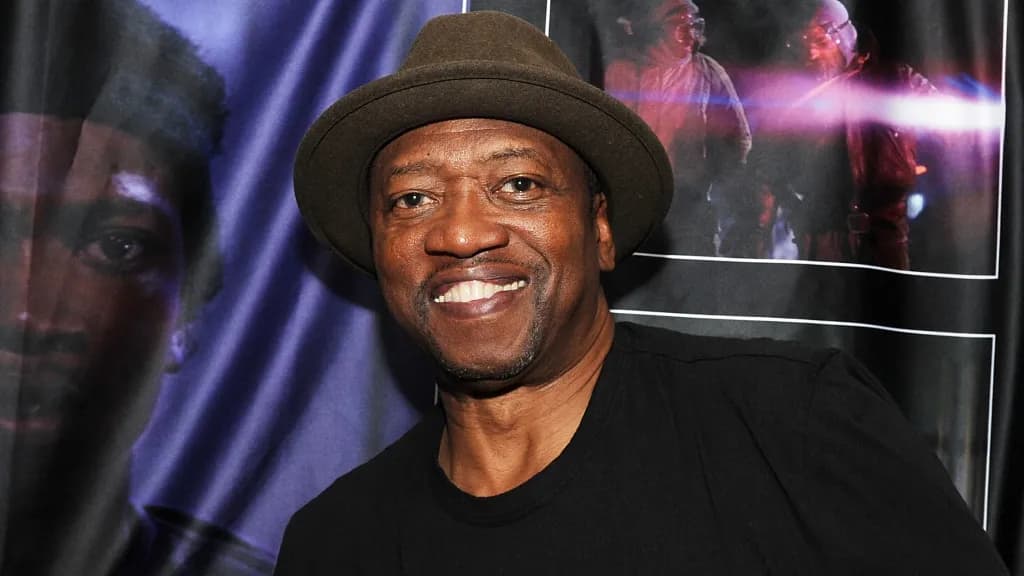
The Man Who Skated Through the Apocalypse: Why T.K. Carter Mattered
T.K. Carter, best known as the boombox-toting Nauls in John Carpenter’s sci-fi classic The Thing, has died at 69. A career chameleon who moved effortlessly between sitcom warmth and gritty drama, Carter defied the "expendable" tropes of 80s horror to leave an indelible mark on Hollywood history.
In the bleak, nihilistic expanse of John Carpenter’s The Thing (1982), amidst shape-shifting abominations and flamethrowers, one image defies the gloom: a man gliding through the corridors of an Antarctic research station on roller skates, blasting Stevie Wonder’s "Superstition" from a boombox.
That man was Nauls. And the actor who gave him that defiant, electric pulse of life, T.K. Carter, has died at 69.
While the industry mourns a "veteran character actor," this reduction misses the point. Carter wasn't just a face in the background. In an era where Black men in horror were statistically doomed to die first and die quietly, Carter carved out a space of vibrant, undeniable humanity. He didn't just survive the script’s initial cull; he survived the industry’s narrow imagination, building a career that spanned five decades of American pop culture.
The Cook, The Teacher, The Addict
To understand Carter’s specific genius, you have to look at the dissonance of his most famous role. Nauls was the youngest member of Outpost 31, a cook who brought funk to a frozen graveyard. In the hands of a lesser actor, Nauls would have been comic relief—a hysterical distraction.
Carter played him with a jagged edge. When he cuts the music to stare down a Norwegian helicopter, the swag evaporates, replaced by a hyper-alert paranoia that mirrors the audience’s own fear. He was the audience surrogate, not because he was the hero (that was Kurt Russell’s MacReady), but because he was the only one reacting with appropriate absurdity to an absurd situation.
But Carter’s range extended far beyond the ice.
- The Warmth: As Mike Fulton in Punky Brewster (1985–1986), he was the gentle, moral anchor for a generation of latchkey kids, offering a kind of paternal stability that 80s sitcoms rarely granted Black male leads.
- The Grit: Years later, he shattered his sitcom image as Gary McCullough in HBO’s The Corner (2000). Portraying a man unraveling under the weight of heroin addiction, Carter delivered a performance of such quiet devastation that The New York Times noted he "stole the heart" of the series.
Defying the "First to Die" Algorithm
The "Black Guy Dies First" trope is a staple of 80s horror cinema. It is a cynical calculation: minority characters are expendable assets used to raise the stakes for the white protagonist.
T.K. Carter broke the algorithm.
In The Thing, Nauls does not suffer a gruesome, on-screen death. He simply... vanishes. In the film's chaotic climax, he wanders into the shadows and is never seen again. For 40 years, fans have debated his fate. Was he assimilated? Did he freeze?
This ambiguity is Carter’s victory. By making Nauls so distinct—so undeniably present—he forced the audience to care about his absence. He refused to be a plot device. As noted by Graveyard Shift Sisters, the 80s were a wasteland for nuanced Black representation in horror; Carter was an oasis.
The "Thing" Curse: A Masterpiece Delayed
It is impossible to discuss Carter’s legacy without addressing the commercial tragedy of The Thing. Released in the summer of 1982, it was obliterated at the box office by E.T. the Extra-Terrestrial. Audiences wanted Steven Spielberg’s Reese's Pieces; they weren't ready for John Carpenter’s paranoia.
For actors like Carter, this was a career bottleneck. Had the film been the instant hit it is today, Carter likely would have vaulted into leading man status alongside Eddie Murphy or Gregory Hines. Instead, he became the ultimate "utility player"—the guy you called when you needed a scene saved, a joke landed, or a moment grounded.
The Metrics of a Cult Classic:
- Initial Box Office: $19.6 Million (Flop)
- Current Rotten Tomatoes Score: 85% (Certified Fresh)
- Cultural Impact: Indisputably high. Nauls is now a horror icon, referenced in everything from Stranger Things to video games.
Contrarian Take: The Tragedy of the "That Guy" Actor
While tributes will flow for Carter’s "versatility," we should also view his career as an indictment of Hollywood’s casting machinery.
T.K. Carter possessed the kinetic energy of Robin Williams and the dramatic weight of Forest Whitaker. Yet, for most of the 90s, he was relegated to guest spots (The Nanny, Moesha, The Steve Harvey Show). The industry knew he was reliable, but it refused to bet on him as a star.
We celebrate the "character actor" as a noble profession, but often it is a label forced upon actors of color whose range exceeds the opportunities provided to them. Carter didn't just "support" scenes; he frequently outshone the leads he was hired to prop up. His death isn't just the loss of an actor; it's the final chapter of a talent that was consistently underutilized by a system that couldn't figure out where to put a man who could skate, cry, and terrify in equal measure.
The Final Fade
In the final moments of his life, T.K. Carter remained a working actor, with credits rolling into the 2020s. He never retired, because actors like him don't get the luxury of coasting. They hustle.
Nauls may have vanished into the Antarctic darkness, leaving no trace. But T.K. Carter left plenty. He left a blueprint for how to steal a scene without saying a word, how to bring warmth to a cold script, and how to skate through a hostile industry with your head held high.
The generator is down. The temperature is dropping. But the music is still playing.
The Thing (1982) - Nauls Skates to Superstition I selected this video because it showcases the iconic scene described in the lede, perfectly capturing the unique energy T.K. Carter brought to the role of Nauls.
Stay informed
Get our latest articles delivered to your inbox.
Related Articles
Artemis II Explained: Why NASA’s Next Moon Mission Won't Touch the Lunar Surface
Discover why NASA is choosing a flyby over a landing and how this high-stakes test drive paves the way for a permanent lunar presence.
Audio’s Red Carpet Moment: The Golden Globes Finally Bend the Knee to Podcasting
The Golden Globes have finally added a podcast category, signaling a massive shift in Hollywood's hierarchy. Here is why this isn't just about trophies—it's about the industry's obsession with audio IP as the new gold rush.
The Caliphate Ghost: Why the US Just Dropped 40 Tons of Ordnance on a "Defeated" Enemy
The US military's latest airstrikes in Syria aren't just about neutralizing ISIS remnants—they expose a fragile containment strategy teetering on the edge of failure. Here is why Washington is still dropping bombs on a "defeated" enemy seven years later.
‘Uninvestable’: Trump pitch to oil execs yields no promises
Despite the dramatic capture of Nicolás Maduro and a White House push for a $100 billion investment to flood the market with cheap crude, US oil titans like ExxonMobil are rejecting President Trump's Venezuela pitch. The verdict? Without massive legal and economic reforms, the world's largest oil reserves remain "uninvestable.”