Trump Threatens Tariffs on Nations That Resist His Greenland Push
Trump threatened tariffs on countries that resist U.S. demands over Greenland, signaling a shift from trade policy to geopolitical coercion. Allies in Denmark and Congress push back, warning that economic pressure could fracture NATO and reshape Arctic strategy.
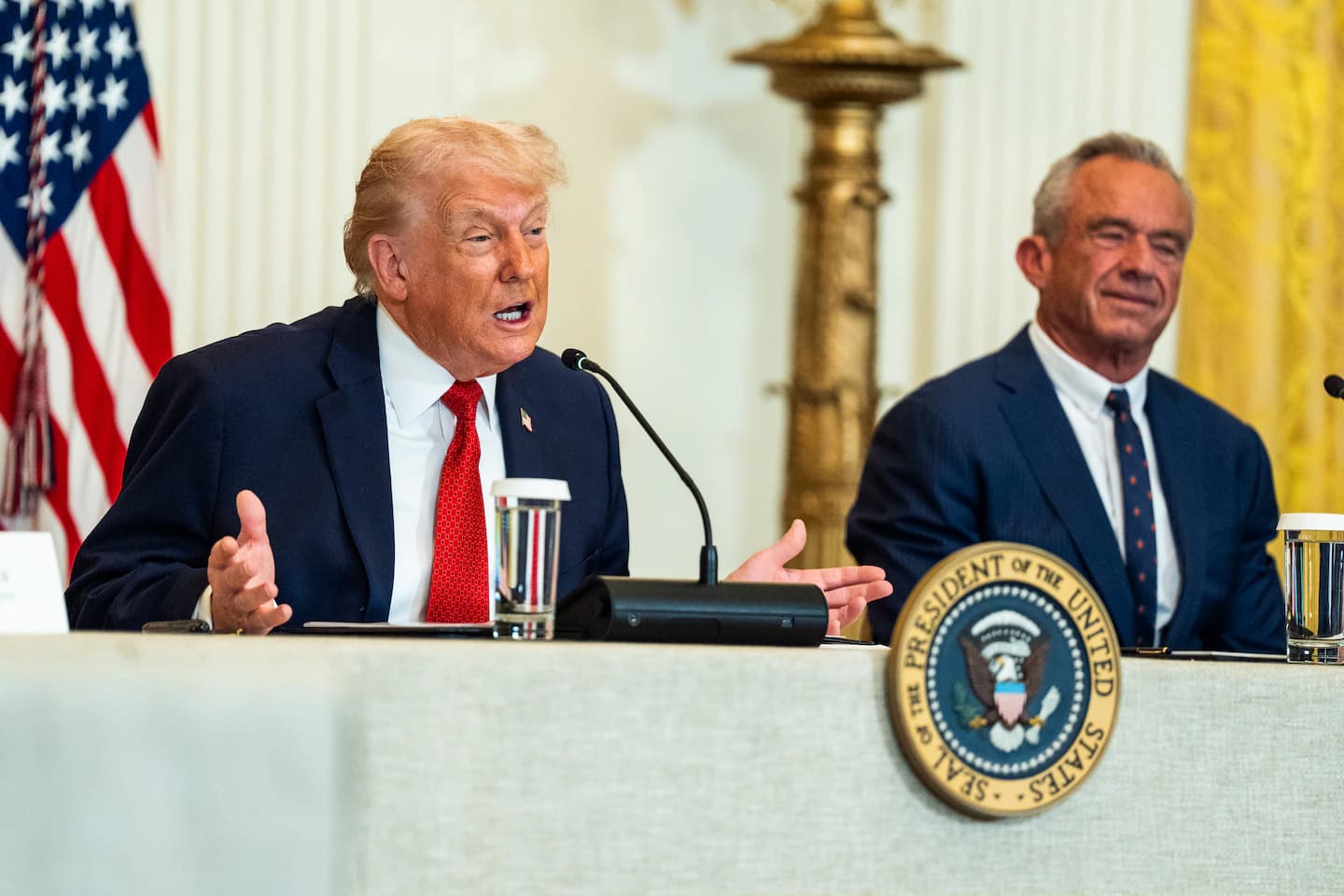
WASHINGTON — It began, as these geopolitical earthquakes often do, in the most mundane of settings. On a Friday morning intended to showcase rural healthcare initiatives, President Donald Trump sat in the White House East Room, flanked by doctors and administrators. Then, between remarks on prescription drug pricing and hospital accessibility, he pivoted to the Arctic.
“I may put a tariff on countries if they don’t go along with Greenland,” Trump declared, his tone casual but his intent unmistakable. “Because we need Greenland for national security.”
The room went quiet. In a single sentence, the President of the United States had moved the Greenland acquisition saga from the realm of "absurd discussion"—as Danish Prime Minister Mette Frederiksen famously called it during his first term—to the brink of a trade war. The implication was clear: nations that resist the U.S. annexation of the semi-autonomous Danish territory could face the same punitive economic measures previously reserved for hostile trading partners.
This is no longer a negotiation. It is an eviction notice served via tax policy.
The "Don't Go Along" Doctrine
The vague phrasing of Trump’s threat—“countries that don’t go along”—is precisely what makes it dangerous. It effectively weaponizes the U.S. consumer market against any sovereign state that defends the territorial integrity of the Kingdom of Denmark.
This escalation comes just 48 hours after a tense summit between U.S. officials and Danish Foreign Minister Lars Løkke Rasmussen. While public statements from the meeting emphasized a desire to "lower the temperature," the reality on the ground is rapidly freezing over. Trump has linked the acquisition directly to the "Golden Dome," his proposed missile defense shield, arguing that owning the island is a prerequisite for American survival in an age of hypersonic threats.
“If we don’t have it, we have a hole in national security,” Trump told reporters, dismissing the NATO alliance’s current access to the Thule Air Base (now Pituffik Space Base) as insufficient.
The administration’s logic represents a stark departure from international norms. Historically, the U.S. has used tariffs to combat currency manipulation or intellectual property theft. Using them to coerce a NATO ally into ceding territory creates a precedent that experts warn could shatter the alliance. If Denmark refuses to sell, and Germany or France supports Denmark’s right to refuse, do German cars and French wines suddenly face a 25% duty?
According to the President, the answer is yes. He explicitly compared the tactic to his previous pressure campaigns on Paris and Berlin regarding drug prices. "I may do that for Greenland too," he mused.
The Arctic Sentry: NATO's Internal Standoff
The reaction across the Atlantic has been a mixture of disbelief and mobilization. For the first time in the alliance's history, NATO members are deploying troops to a fellow member's territory to deter the United States.
Under the banner of "Arctic Sentry," small detachments from France, Germany, Norway, and Sweden have begun arriving in Greenland. Officially, these are routine exercises. Geopolitically, they are a human tripwire. The message from Brussels is clear: An annexation of Greenland is not a bilateral issue between Washington and Copenhagen; it is an existential threat to European sovereignty.
- Denmark’s Stance: "Greenland is not for sale. Greenland is not Danish. Greenland belongs to Greenlanders." — PM Mette Frederiksen.
- The U.S. Legislative Push: Congressional Republicans are falling in line. The "Make Greenland Great Again Act", introduced in the House, authorizes the President to enter formal negotiations for the purchase, signaling that this is a coordinated party platform, not just executive improvisation.
This militarization of the dispute exposes the fragility of the "Everything but Territory" strategy that European diplomats had hoped would appease Trump. Their offer—mineral rights, expanded base access, and joint investment—failed because it misunderstood the objective. Trump doesn't just want the resources; he wants the deed.
The Contrarian Take: The Real Estate Smokescreen
While the media fixates on the absurdity of "buying an island" in 2026, the obsession with sovereignty obscures the actual strategic play. This is likely not about owning 836,000 square miles of ice; it is about breaking the European Union’s monopoly on Arctic governance.
Trump is effectively applying the "Madman Theory" to the Arctic Circle. By demanding the impossible—full annexation—he shifts the "Overton Window" of what is acceptable.
Consider the secondary effects:
- Shattering EU Cohesion: By threatening tariffs on "countries that don't go along," Trump invites individual EU member states to cut side deals. Hungary or Italy might stay silent on Greenland to avoid auto tariffs, effectively neutering a unified European response.
- Resource Monopolization: The threat of annexation makes American mining companies the only "safe" partners for Greenland. If Nuuk fears a hostile takeover, they might preemptively grant exclusive rare-earth mining contracts to U.S. firms just to buy political breathing room.
- The China Factor: Trump explicitly cited Russian and Chinese encroachment as a pretext. By creating a crisis, he forces NATO to militarize the Arctic far faster than Brussels wanted. He gets his "Golden Dome" defense architecture whether he owns the land or not, because Denmark will be forced to host it to prove their loyalty.
The "purchase" is a MacGuffin. The goal is hegemony.
Buying a Crisis
The $78 billion figure floated by administration insiders—roughly equivalent to the GDP of Ethiopia—is designed to sound generous. But for Greenlanders, who have steadily worked toward independence since the 2009 Self-Rule Act, the offer is an insult. It treats their homeland as a distressed asset rather than a nascent nation.
"We don't want to be Americans, we don't want to be Danish," said Greenland’s Prime Minister Jens-Frederik Nielsen in a defiant social media post. "We are a people. Not a portfolio item."
Yet, the tariff threat changes the calculus for Nuuk. Greenland depends heavily on an annual block grant from Denmark (approx. $600 million). If Trump’s tariffs cripple the Danish economy, that subsidy becomes vulnerable. He is effectively squeezing the landlord to evict the tenant.
The End of the "Polite Request"
We are witnessing the final death of the post-WWII diplomatic consensus. For 80 years, the United States expanded its influence through alliances and soft power. When it needed a base in Greenland (Thule), it signed a treaty.
Trump’s Friday declaration marks a reversion to 19th-century statecraft: Territory is currency, and trade is a weapon of conquest.
If the administration follows through, the immediate cost will be higher prices for American consumers on Danish insulin, LEGOs, and pork. But the long-term cost will be the total erosion of the distinction between an ally and a vassal.
When the President says he might tax his friends for refusing to sell him their home, he isn't making a deal. He is running a protection racket. And right now, the price of protection is the world's largest island.
Trump
Stay informed
Get our latest articles delivered to your inbox.
Related Articles
Inside Elon Musk’s $134 Billion Invoice to OpenAI
Elon Musk has escalated his legal war against OpenAI, filing a demand for $134 billion in "wrongful gains" from the AI giant and its backer, Microsoft.
UK Marketing Budgets Flat in Q4 2025: IPA Bellwether Report
The numbers didn’t just slow down. They stopped.
Stop Overpaying Your Accountant: The Strategic Case for Algorithmic Tax Filing
Stop paying the "vanity accountant" tax. We analyze why smart investors are switching to H&R Block Deluxe for the 2026 tax season—and how a limited-time $30 deal makes the ROI undeniable.
PMG Acquires Digital Voices: Why Data-Backed Creator Marketing Just Got Serious
Global marketing tech firm PMG has acquired influencer agency Digital Voices in a major strategic move to merge data science with creator storytelling. Discover why this deal signals the end of "spray and pray" influencer marketing and what the integration of AI-tools "Chord" and "Composer" means for the future of the industry.