PMG Acquires Digital Voices: Why Data-Backed Creator Marketing Just Got Serious
Global marketing tech firm PMG has acquired influencer agency Digital Voices in a major strategic move to merge data science with creator storytelling. Discover why this deal signals the end of "spray and pray" influencer marketing and what the integration of AI-tools "Chord" and "Composer" means for the future of the industry.
In a major move that signals the maturity of the creator economy, global independent marketing powerhouse PMG has acquired Digital Voices, a leading influencer marketing agency with offices in London and New York.
For business leaders and marketing war enthusiasts, this isn't just another agency merger. It represents a fundamental shift in how AdLand views creators: not as a separate "PR" silo, but as a scalable, trackable performance channel that rivals paid search and social.
Here is the deep dive on what this deal means, why it happened, and what you need to know about the future of performance-driven influencer marketing.
The Deal at a Glance
On January 6, 2026, PMG announced its acquisition of Digital Voices. While financial terms were not disclosed, the strategic implications are clear.
- The Buyer: PMG, a Dallas-based global marketing technology company that manages over $7 billion in media spend annually. They are known for their proprietary marketing operating system, Alli.
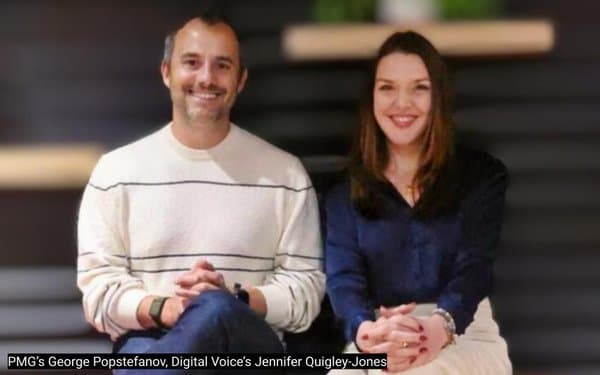
- The Acquired: Digital Voices, an agency founded in 2017 by Jennifer Quigley-Jones. With a team of 70 across London, New York, and Costa Rica, they have built a reputation for "guaranteed results" for clients like DoorDash, Adobe, and Unilever.
- The Context: This is PMG’s fourth acquisition in 15 years and follows their summer 2025 purchase of Momentum Commerce, highlighting a rigorous expansion into data-heavy commerce and creator sectors.
Why This Acquisition Matters (The "Why")
The headline isn't just that PMG bought an agency; it's why they bought this specific one.
Digital Voices isn't a typical "talent management" shop that sends free soap to Instagram models. They are an agency built on data-backed creativity. They famously guarantee results for their clients—a risky move that requires immense confidence in your data.
PMG, heavily comprised of engineers and data scientists, saw a perfect cultural and technical fit. By acquiring Digital Voices, PMG is effectively saying that influencer marketing is now a hard-science discipline.
The Technical Integration: Where the Magic Happens
The real value of this deal lies in the technology. Both companies have proprietary tech stacks that, when combined, create a "full-funnel" powerhouse:
- PMG brings "Alli": A massive marketing operating system that unifies media, data, and creative intelligence.
- Digital Voices brings "Chord" & "Composer":
- Chord: A campaign management platform that streamlines the messy logistics of running hundreds of influencer partnerships.
- Composer: An AI-enabled tool built on Google Gemini that handles sentiment analysis, speech-to-text, and generative insights to ensure content actually resonates.
The Strategy: PMG plans to integrate Chord and Composer directly into Alli. This means a PMG client could theoretically see their Google Search ad performance side-by-side with their TikTok creator ROI in a single dashboard, optimizing budget between the two in real-time.
By The Numbers: Grounding the Hype
To understand the scale of this opportunity, we have to look at the data driving the decision.
- 10x Growth: PMG projects the influencer marketing industry will grow 10-fold over the next 8 years.
- $1 Return = $8 Earned: Digital Voices boasts an average ROI of $8 for every $1 spent on influencer marketing, a metric that likely attracted PMG's performance-focused leadership.
- 4 Billion Views: Digital Voices has driven over 4 billion organic views for their clients to date.
- 1,000+ Employees: The combined entity strengthens PMG's global footprint, pushing their headcount over the 1,000-person mark.
Expert Perspective: The End of "Spray and Pray"
The following analysis is based on current market trends and the strategic positioning of both firms.
The Bottom Line: This acquisition is a death knell for the "spray and pray" era of influencer marketing.
For years, brands treated influencer budgets as "testing" money—hoping a viral video would stick. PMG’s move validates a new reality: Creator content is media. We are seeing a trend called "Performance Storytelling." It is no longer enough to just have a creator talk about a product.
- Creative is the new targeting: With privacy changes (like iOS tracking updates) making traditional ad targeting harder, the content itself does the targeting.
- Creators as production houses: Brands are realizing it is cheaper and more effective to hire 50 creators to make content than to hire one high-end production studio for a TV spot.
- Consolidation is key: Boutique agencies are struggling to compete with the data moats of giants. We expect to see more independent "specialist" agencies snapped up by large tech-forward holding companies like PMG, Publicis, and WPP to feed their AI models with human-generated creative data.
Conclusion: What Should You Do?
The PMG and Digital Voices deal is a signal flare. If you are a brand leader or marketer, you need to ask yourself: Is my influencer strategy integrated with my performance data?
If your creator team sits in a different building (or Zoom room) than your paid media team, you are already behind. The future belongs to brands that can blend the human authenticity of creators with the ruthless efficiency of data science.
Stay informed
Get our latest articles delivered to your inbox.
Related Articles
Inside Elon Musk’s $134 Billion Invoice to OpenAI
Elon Musk has escalated his legal war against OpenAI, filing a demand for $134 billion in "wrongful gains" from the AI giant and its backer, Microsoft.
Trump Threatens Tariffs on Nations That Resist His Greenland Push
Trump threatened tariffs on countries that resist U.S. demands over Greenland, signaling a shift from trade policy to geopolitical coercion. Allies in Denmark and Congress push back, warning that economic pressure could fracture NATO and reshape Arctic strategy.
UK Marketing Budgets Flat in Q4 2025: IPA Bellwether Report
The numbers didn’t just slow down. They stopped.
Stop Overpaying Your Accountant: The Strategic Case for Algorithmic Tax Filing
Stop paying the "vanity accountant" tax. We analyze why smart investors are switching to H&R Block Deluxe for the 2026 tax season—and how a limited-time $30 deal makes the ROI undeniable.