iPhone Fold Display Leaked: 5 Reasons This Changes Everything
The "crease" is finally gone. Discover the breakthrough "Advanced Creaseless" display technology revealed at CES 2026 that signals the imminent arrival of the iPhone Fold—and why Apple’s long wait was finally worth it.
The "Holy Grail" of foldables has finally arrived, and it explains exactly why Apple has been silent for so long.
If you’ve been following the smartphone industry for the last decade, you know the drill. Samsung launches a foldable, early adopters cheer, and the rest of the world squints at the screen and asks, "What about that crease?"
For years, the "crease"—that visible valley running down the center of every Galaxy Fold and Pixel Fold—has been the single biggest aesthetic flaw holding the technology back from true mainstream domination. It’s the reason many potential buyers, especially loyal iPhone users, have stayed on the sidelines. But at CES 2026, that excuse just evaporated.
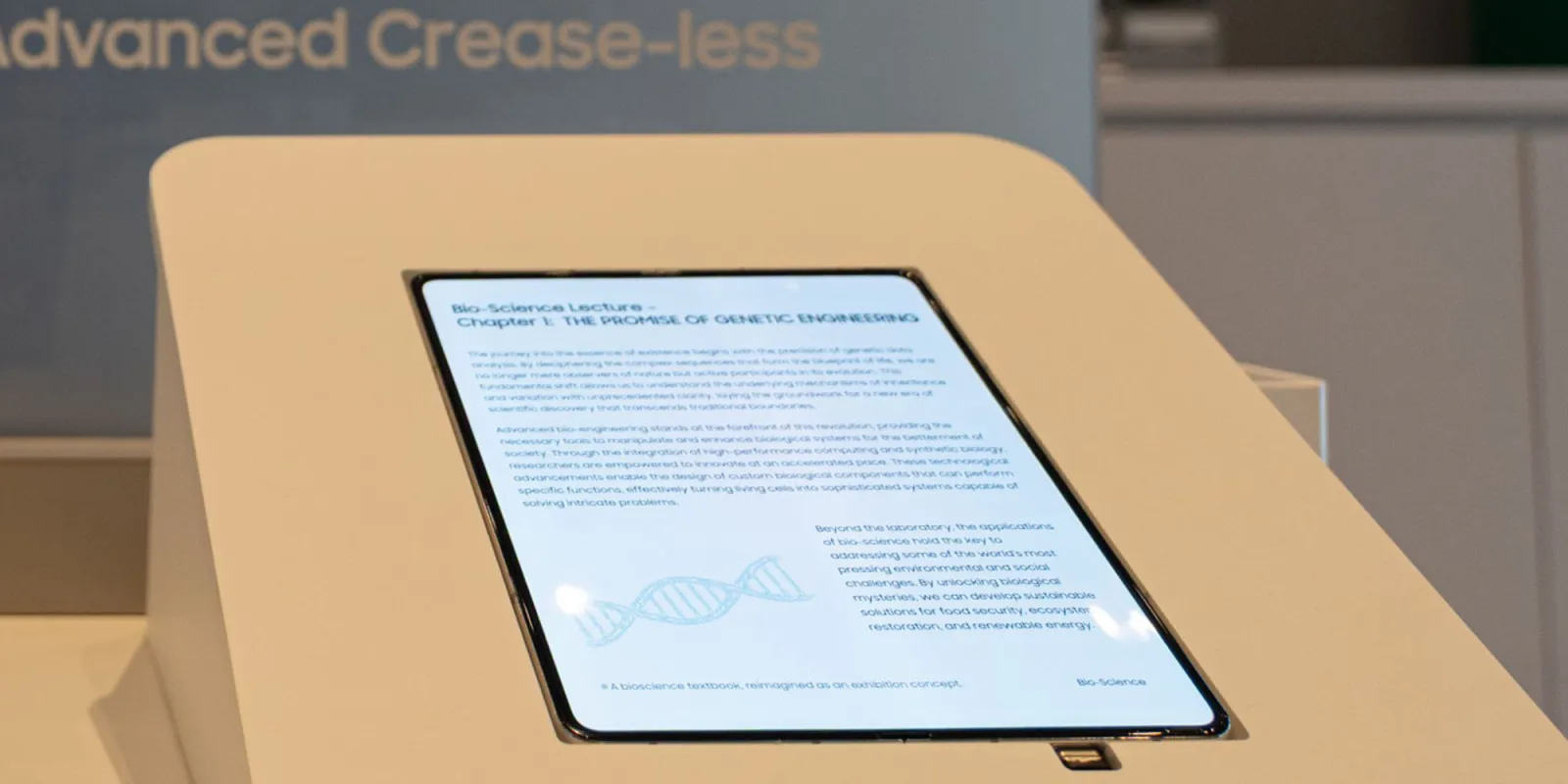
In a move that felt less like a tech demo and more like a declaration of war, Samsung Display showed off a new prototype that insiders are calling the "Advanced Creaseless" panel. While they quickly hid it away after a brief showing, the message was clear to everyone watching: The technology Apple has been waiting for is finally here.
Here is everything we know about the display that will likely power the iPhone Fold, and why this specific breakthrough signals the start of a new era for mobile computing.
1. The "Creaseless" Breakthrough: How It Works The prototype shown at CES 2026 wasn't just a minor improvement; it was a generational leap. Attendees who saw the panel described the difference between it and the Galaxy Z Fold 7 as "night and day." But how did they actually achieve the impossible?
According to reports from the showroom floor and recent supply chain leaks, this isn't just about better glass. The innovation lies deep within the structural engineering of the panel itself:
• Laser-Drilled Stress Dispersion: Instead of a single hinge point taking all the pressure (which creates the crease), the new panel uses laser-drilled metal plates. These micro-perforations disperse the mechanical stress of folding across a wider surface area.
• Liquid Metal Integration: Rumors suggest Apple is pairing this screen with a proprietary hinge mechanism made from "liquid metal" alloys. This allows for a complex, gear-free movement that maintains the screen’s perfect tension when flat.
• The "Zero-Gap" Finish: Unlike previous iterations that left a small air gap or had a visible dip, this display lays completely flat, mimicking the feel of a standard rigid iPad screen.
The Result: A display that looks and feels like a solid sheet of glass when open, with zero optical distortion where the hinge lies.
2. The "Apple Delay" Explained For years, tech pundits have criticized Apple for being "late" to the foldable party. Samsung launched the first Galaxy Fold in 2019. It is now 2026. By Silicon Valley standards, that six-year gap is an eternity.
However, this new display validates Apple's classic "best, not first" strategy. Apple’s engineering teams reportedly rejected early foldable panels specifically because of the crease.
To a company obsessed with industrial design perfection—where even the inside of a charging port is scrutinized—a visible wrinkle in the center of a premium device was unacceptable.
Why the wait matters:
• Durability Standards: Early foldables were prone to cracking in cold weather or failing after dust ingress. Apple’s delay allowed material science to catch up.
• Software Optimization: iOS (or "iPhoneOS" as rumors suggest for this device) needed to be rebuilt to handle dynamic resizing without the jankiness seen on early Android tablets.
• Supply Chain Maturity: Manufacturing these complex "Advanced Creaseless" panels at the scale of 50-100 million units requires a level of yield consistency that is only just now becoming possible.
3. Head-to-Head: iPhone Fold vs. Galaxy Z Fold 8 With the technology now ready, the inevitable showdown is coming. Late 2026 will likely see the battle of the titans: The debut iPhone Fold against Samsung's eighth-generation veteran.
Based on the latest leaks and rumors, here is how the specs are stacking up:FeatureRumored iPhone FoldSamsung Galaxy Z Fold 8Inner Display8.3-inch "Super Retina XDR" (Creaseless)8.0-inch Dynamic AMOLED 2XProcessorApple A19 / A19 ProSnapdragon 8 Gen 5Battery Life~32 Hours Video Playback~4500 mAh (similar endurance)HingeLiquid Metal (Zero Crease)Armor Aluminum (Minimal Crease)MultitaskingiOS Integrated (Continuity)One UI 8 (Split Screen veteran)Estimated Price$1,999+$1,899
The Key Takeaway: Samsung still holds the edge in legacy features like S-Pen support and mature multitasking software, but the iPhone Fold will likely win on raw processing power (the A19 chip) and, crucially, the "premium feel" of that creaseless display.
4. The Expert Perspective: A Market Shift The Bottom Line: This isn't just about a phone that folds; it's about the death of the "Beta Era."
For the last seven years, owning a foldable phone came with a compromise. You paid $1,800 to be a beta tester. You accepted that your screen felt like plastic, that it might break if you looked at it wrong, and that you had to live with a visible line down the middle of your movies.
The arrival of the Advanced Creaseless Display marks the end of that compromise.
From an industry perspective, Apple’s entry legitimized the form factor. Just as the Apple Watch didn't invent the smartwatch but defined it, the iPhone Fold will likely set the standard for what a "finished" foldable looks like. We expect to see a massive "supercycle" of upgrades in late 2026. Business users who rely on iPads for productivity but hate the bulk will finally have a pocketable solution that doesn't feel like a toy.
5. Release Date & Pricing: When Can You Buy It? If you are ready to throw your credit card at the screen, you will need a little more patience.
• Timeline: While the display technology was shown at CES in January 2026, mass production for an Apple device typically lags 6–8 months behind component validation. Analysts like Ming-Chi Kuo and Ross Young are pointing toward a September or October 2026 launch alongside the iPhone 18 lineup.
• Pricing: Start saving now. The "Apple Tax" combined with this cutting-edge panel technology puts estimates firmly in the $1,999 to $2,400 range. It will likely be positioned as an ultra-premium "Pro" or "Ultra" tier device, sitting above the Pro Max in the lineup.
Conclusion The "mythical" iPhone Fold is no longer a myth—it is a piece of hardware that exists in the real world. The crease is gone, the specs are monstrous, and the timeline is set.
For the last few years, we’ve asked, "Where is Apple?" Now we know: They were waiting until they could do it right.
Stay informed
Get our latest articles delivered to your inbox.
Related Articles
britannica review
Is britannica worth visiting today? From addictive daily word games to verified historical deep-dives, read our full review of the modern encyclopedia.
The Honeymoon is Over: Threads Just Turned on the Money Printer
Did you really think Mark Zuckerberg was running a charity? Of course not.
Samsung’s Android XR Glasses 2026: 12MP Camera, Dual Models, and the Fight for Your Face
Samsung is finally entering the smart glasses arena in 2026. New leaks reveal the upcoming Android XR glasses will feature a 12MP camera, deep Gemini AI integration, and a dual-model strategy to rival Meta’s Ray-Bans. Here is everything we know about the specs, the "Pro" variant, and why this could be the ultimate Android accessory.
[modo.us] Review: Is It Actually Useful or Just Hype?
Is Modo.us the best new social casino or just another coin trap? We spent two weeks testing the "Live Dealer" tables and grinding daily bonuses to see if the payouts are real—and if the $100 cash-out limit is a dealbreaker for casual players.