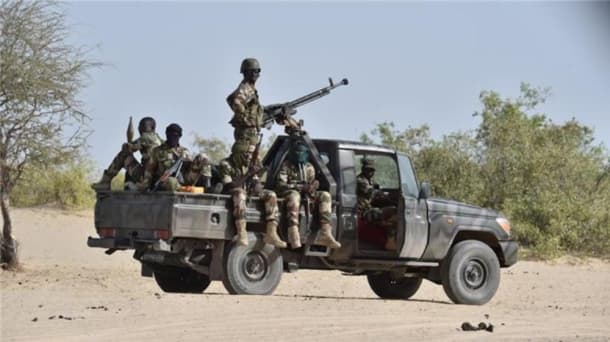
U.S. Conducts Precision Strike Against ISIS in Nigeria: Trump Cites Protection of Christians as Key Driver
On Christmas Day, the U.S. Africa Command (AFRICOM) conducted a precision strike against ISIS targets in Nigeria. Following reports that the group was planning attacks on Christian communities, President Trump authorized the operation, signaling a major shift in U.S. foreign policy and its role as a protector of religious freedom in the Sahel.
On Christmas morning, the quiet of the holiday was broken by a significant military development in West Africa. President Donald Trump announced that the U.S. Africa Command (AFRICOM) had successfully conducted a precision airstrike against Islamic State (ISIS) targets within Nigeria.
This operation wasn't just a standard counter-terrorism mission; it was framed by the White House as a direct response to intelligence suggesting the group was actively targeting Christian communities during the Christmas season.
For readers following global security and Nigerian affairs, this strike represents a pivotal moment in U.S.-Africa relations. It signals a shift in how the United States utilizes its military might to protect religious freedom and stabilize regions plagued by extremist violence. Understanding the "why" behind this strike provides a clearer picture of the current administration's foreign policy and the ongoing security challenges facing Nigeria.
The Christmas Day Strike: What We Know So Far
The operation, executed by AFRICOM, targeted a known stronghold of the Islamic State West Africa Province (ISWAP), a faction of ISIS that has caused significant instability in Nigeria’s northeastern corridor. According to reports from VIN News, the strike was "surgical," aimed at eliminating high-value targets and disrupting planned holiday attacks.
- Location: While specific coordinates remain classified, operations of this nature typically center around the Lake Chad Basin and Borno State.
- Methodology: The strike utilized unmanned aerial vehicles (UAVs) to ensure precision and minimize the risk of collateral damage to civilians.
- Outcome: Early assessments suggest the elimination of several key ISIS tactical leaders and the destruction of a significant logistics hub used for coordinating attacks.
President Trump’s statement emphasized that the U.S. would not stand idly by while "radical Islamic terrorists" plotted against "innocent Christians celebrating the birth of Christ." This rhetoric ties military action directly to the protection of religious minorities, a cornerstone of his administration's stated platform.

The Rising Threat to Christian Communities in Nigeria
To understand the necessity of this strike, one must look at the escalating violence in Nigeria’s "Middle Belt" and the Northeast. For years, groups like Boko Haram and ISWAP have targeted both Muslims and Christians, but the holiday season often sees a spike in attacks against churches and Christian villages.
A Pattern of Holiday Violence
In previous years, Christmas in Nigeria has been marred by tragedy. From church bombings to mass kidnappings, extremist groups use the global visibility of the holiday to spread terror. By conducting the strike on December 25, the U.S. sent a clear message: the window of opportunity for these groups is closing.
The Vulnerability of the Middle Belt
While the strike targeted ISIS in the North, the broader context includes the ongoing "farmer-herder" conflicts in the Middle Belt, which often take on religious overtones. By taking a hardline stance against ISIS, the U.S. is signaling a broader commitment to security that many hope will eventually extend to the protection of all vulnerable religious groups in the country.
AFRICOM’S Expanding Role in the Sahel and Lake Chad Basin
The U.S. Africa Command (AFRICOM) has traditionally focused on training, intelligence sharing, and advisory roles. However, this direct kinetic action suggests a more proactive stance.
Key Objectives of the Current Strategy:
- Disrupting Transnational Networks: ISIS in Nigeria does not operate in a vacuum; they share resources and ideology with groups in Mali, Niger, and Burkina Faso.
- Supporting the Nigerian Military: The Nigerian Armed Forces have been stretched thin. U.S. air superiority provides a force multiplier that the local military currently lacks.
- Stability for Trade: A stable Nigeria is essential for West African trade and global energy markets.
This strike is a reminder that while the U.S. is "pivoting" to other global theaters, the security of Africa remains a top priority for the Pentagon, especially when it intersects with American values of religious liberty.
The "Bottom Line": Expert Perspective on the Geopolitical Shift
When we look beyond the immediate headlines, this strike reveals a deeper analytical takeaway regarding U.S. foreign policy under Donald Trump.
The Bottom Line: This is the emergence of "Moral Realism" in the Sahel. Unlike previous administrations that may have framed strikes purely in terms of "national security interests" or "regional stability," the current rhetoric explicitly combines military force with the defense of Western-aligned religious values.
By specifically naming the "targeting of Christians" as the catalyst, the Trump administration is doing two things:
- Domestic Signaling: It reassures his political base that the U.S. is the global "defender of the faith."
- Psychological Warfare: It tells ISIS and its affiliates that their specific choice of targets—religious minorities—will trigger an immediate and overwhelming American response, regardless of the geographic distance.
However, the long-term challenge remains. Military strikes can disrupt logistics, but they do not solve the underlying socio-economic issues—poverty, lack of education, and government corruption—that allow extremism to flourish in the first place.
Actionable Takeaways for News Readers and Enthusiasts
For those following this developing story, here is what you should watch for in the coming weeks:
- Retaliation Risks: Security experts often warn of "soft target" retaliation following high-profile airstrikes. Travelers and residents in major Nigerian cities like Abuja and Lagos should remain vigilant.
- Diplomatic Fallout: Watch for statements from the Nigerian government. While they welcome the help, there is always a delicate balance between accepting foreign aid and maintaining national sovereignty.
- Increased Surveillance: Expect to see an uptick in U.S. intelligence flights over the Lake Chad Basin as AFRICOM assesses the impact of the strike.
Conclusion: A New Era of Intervention?
The U.S. strike against ISIS in Nigeria on Christmas Day is more than just a headline; it is a significant marker of how the U.S. intends to engage with the African continent moving forward. By blending military precision with a clear moral mandate—the protection of Christians—the Trump administration has redefined the rules of engagement in the region.
The success of this operation will be measured not just by the number of targets neutralized, but by whether it leads to a sustained decrease in violence against innocent civilians of all faiths.
Stay informed
Get our latest articles delivered to your inbox.
Related Articles
Artemis II Explained: Why NASA’s Next Moon Mission Won't Touch the Lunar Surface
Discover why NASA is choosing a flyby over a landing and how this high-stakes test drive paves the way for a permanent lunar presence.
Audio’s Red Carpet Moment: The Golden Globes Finally Bend the Knee to Podcasting
The Golden Globes have finally added a podcast category, signaling a massive shift in Hollywood's hierarchy. Here is why this isn't just about trophies—it's about the industry's obsession with audio IP as the new gold rush.
The Caliphate Ghost: Why the US Just Dropped 40 Tons of Ordnance on a "Defeated" Enemy
The US military's latest airstrikes in Syria aren't just about neutralizing ISIS remnants—they expose a fragile containment strategy teetering on the edge of failure. Here is why Washington is still dropping bombs on a "defeated" enemy seven years later.
The Man Who Skated Through the Apocalypse: Why T.K. Carter Mattered
T.K. Carter, best known as the boombox-toting Nauls in John Carpenter’s sci-fi classic The Thing, has died at 69. A career chameleon who moved effortlessly between sitcom warmth and gritty drama, Carter defied the "expendable" tropes of 80s horror to leave an indelible mark on Hollywood history.